Last updated: 4 May 2026
The uniform tax rebate is a free HMRC refund for anyone who wears a recognisable work uniform and washes, repairs, or replaces it themselves. It’s worth £60 of tax relief per year for most workers, and significantly more — up to £185 — for specific industries like nursing, ambulance crews, and some trades.
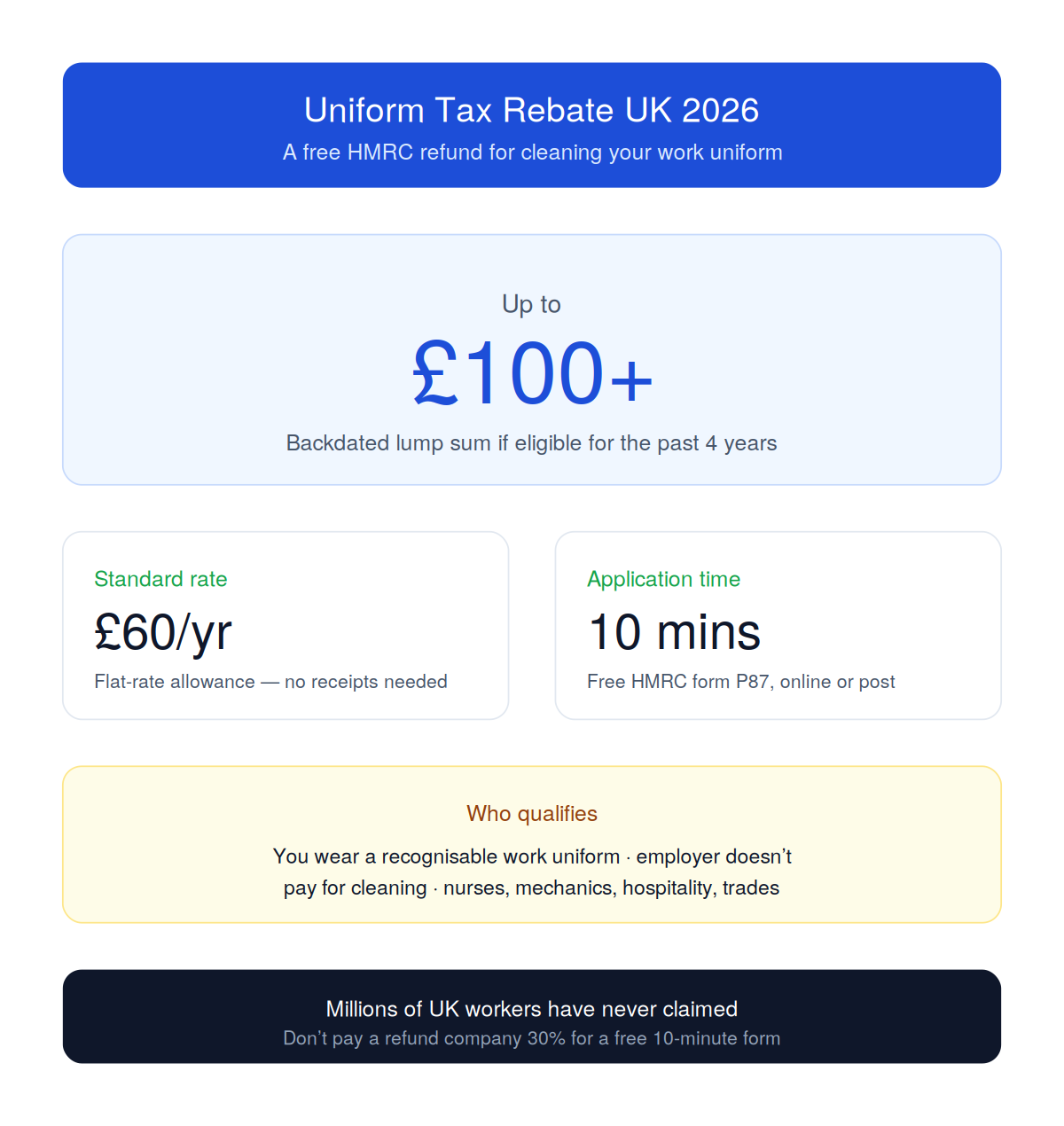
You can backdate a uniform tax rebate claim by up to four tax years, you don’t need receipts for the standard claim, and the whole thing takes about ten minutes via HMRC’s free online form. Yet “tax refund firms” routinely charge 30% or more to do the exact same paperwork on your behalf.
This guide explains who qualifies, how much you can actually get, and how to claim a uniform tax rebate directly — for free — for the 2026/27 tax year.
What is the uniform tax rebate?
The uniform tax rebate (officially called “tax relief for uniforms, work clothing and tools”) is a flat-rate allowance from HMRC that covers the cost of laundering and maintaining a work uniform that your employer requires you to wear.
It’s not a payout — it’s a tax deduction. HMRC adjusts your tax code so you pay less tax going forward, and refunds any overpayment from previous years as a lump sum.
The standard uniform tax rebate is £60 per tax year. As a basic-rate (20%) taxpayer, that puts £12 back in your pocket per year. As a higher-rate (40%) taxpayer, it’s £24. Backdated four years, that’s £48 to £96 in your bank account — for filling in one form.
And for some occupations the figure is much higher. Nurses can claim up to £185 a year, mechanics up to £120, and pilots up to £1,022. We cover the full list below.
Who qualifies for the uniform tax rebate?
You qualify for the uniform tax rebate if all of the following are true:
- You wear a recognisable uniform at work — including a branded T-shirt, polo shirt, hi-vis, or anything with a company logo
- Your employer requires you to wear it
- Your employer doesn’t pay for cleaning, repairs, or replacement
- You paid income tax in the year you’re claiming for
“Recognisable” is the key word. A plain black T-shirt that you bought yourself doesn’t count — even if your employer requires it. But a black polo shirt with the company logo embroidered on it does count, because anyone looking at it would recognise it as a uniform.
Eligibility for the uniform tax rebate covers a huge range of jobs. Nurses, healthcare assistants, paramedics, mechanics, plumbers, electricians, hairdressers, hospitality staff (chefs, waiters, kitchen porters), retail staff with branded uniforms, security guards, cleaners, and many more all qualify.
What if I work from home?
Working from home in casual clothes doesn’t qualify. The uniform tax rebate specifically covers uniforms required by your employer. If you work from home and want to claim tax relief, you’d be looking at a different scheme — see our Working From Home Tax Relief guide.
How much is the uniform tax rebate worth?
The uniform tax rebate amount depends on your job. HMRC has a list of approved flat-rate expense allowances by occupation. Here are some of the most common:
- Default flat rate: £60/year (most workers)
- Nurses, midwives, paramedics: £125/year
- NHS ambulance staff: £185/year
- Mechanics, fitters: £120/year
- Plumbers, gas fitters: £120/year
- Carpenters, joiners: £140/year
- Electricians: £120/year
- Hospitality staff: £60/year (default)
- Retail staff with branded uniforms: £60/year (default)
- Pilots, flight crew: £1,022/year
- Cabin crew: £720/year
Apply your tax rate (20% basic, 40% higher) to get the cash value. So a basic-rate nurse claiming the £125 allowance gets £25 a year back; backdated four years that’s £100, plus a permanent reduction in their tax bill going forward.
The full HMRC list covers hundreds of occupations. If yours isn’t listed, you’ll usually default to the £60 flat rate. See HMRC’s full occupation list (List 3) here.
Can I claim more than the flat rate?
Yes — but only if you keep receipts. If your actual cleaning, repair, and replacement costs exceed the flat-rate allowance for your job, you can claim the actual amount instead. In practice, very few people bother — the flat-rate uniform tax rebate is much simpler and the amounts involved usually aren’t huge.
How to claim the uniform tax rebate — the free way
The uniform tax rebate is claimed using HMRC form P87. You can do this in three ways.
1. Online (fastest)
Go to the GOV.UK form: Claim tax relief for your job expenses. You’ll need a Government Gateway login. The form takes about ten minutes.
You’ll be asked:
- Your job and employer details
- What years you’re claiming for (you can do all four backdated years in one form)
- The flat rate amount (or actual costs if you have receipts)
2. By post
Download the P87 form from GOV.UK, fill it in, and post it to: Pay As You Earn, HM Revenue and Customs, BX9 1AS. No stamp needed.
3. By phone
Call HMRC on 0300 200 3300. This works only if you’re claiming the standard flat rate and have claimed the uniform tax rebate before — otherwise they’ll redirect you to the form.
Don’t pay a “uniform tax refund” company
A whole industry of third-party “tax refund companies” advertises uniform tax rebate claims, taking 30–50% of any refund as their fee. They use names that sound official, target social media ads at workers in uniformed industries, and sometimes contact people via cold text messages.
For a £100 backdated claim, that’s up to £50 in fees — for filling in a free form that takes ten minutes and asks for nothing more than your job title and employer.
HMRC’s own service is free, the form is straightforward, and the refund goes directly into your bank account. There’s no scenario in which using a paid refund firm is the right move for a uniform tax rebate claim.
What happens after you apply?
Once HMRC processes your uniform tax rebate claim:
- Your tax code changes to reflect the new allowance (the change usually adds the letter L or has a different number)
- Any backdated refund is paid as a lump sum — by cheque or bank transfer, within 6 to 8 weeks
- Your future tax bill drops by the relevant amount (£12, £24, or more) per year automatically
You don’t need to reapply every year. Once HMRC has the uniform tax rebate on file for your job, it carries forward automatically — unless you change employer, change job role, or your circumstances change.
What if I change jobs?
If you move to a new job that also requires a uniform, you’ll need to update HMRC. The simplest way is to call them on 0300 200 3300 or update your details through your Personal Tax Account online.
If you move to a job that doesn’t require a uniform, you should also let HMRC know — otherwise they’ll continue applying the allowance and you may end up owing tax later.
Quick checklist before you apply
Before you start your uniform tax rebate application, run through this short checklist:
- Do you wear a recognisable uniform required by your employer?
- Does your employer pay you nothing towards cleaning or repairs?
- Did you pay income tax in the years you’re claiming for?
- Have you been eligible in any of the four previous tax years (2022/23 onwards)?
If you tick all four, you can claim the uniform tax rebate for the current year and backdate up to four years for a typical refund of £48 to £100 — and significantly more for specialist occupations.
Try our free uniform tax rebate calculator
Not sure exactly how much you might be owed? Use our free Uniform Tax Rebate Calculator to get an instant estimate based on your job and how many years you can backdate. No sign-up, no email required — runs entirely in your browser.
Last updated: April 2026 (for the 2026/27 tax year). This guide is for general information only and not personal tax advice. For HMRC’s official guidance, see gov.uk/tax-relief-for-employees.